
Home / Drug and medication detox at home
Drug and medication detox at home
Help after drugs or too much medication – only when the patient is stable. First we assess whether hospital care is needed.
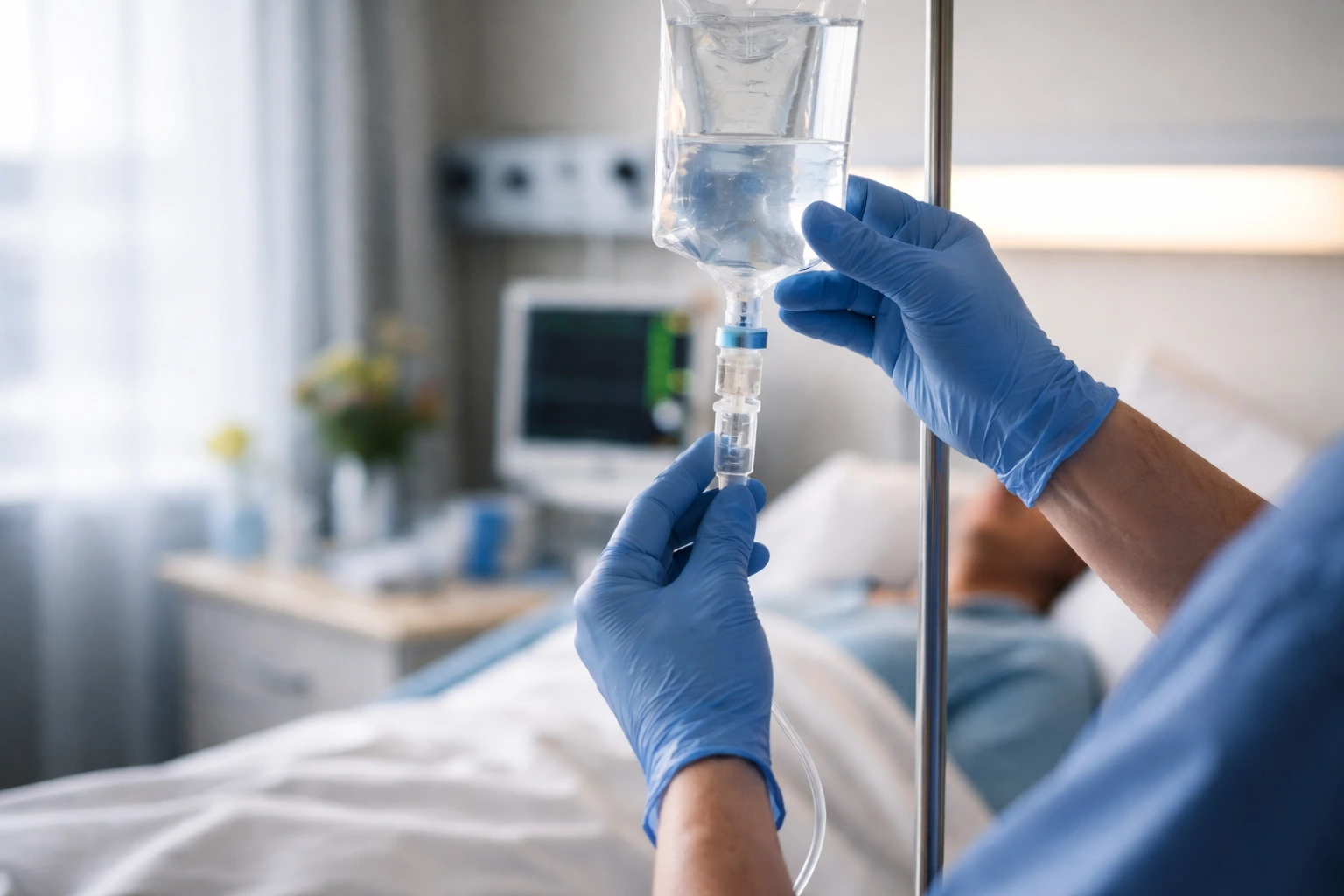
Taking too much medication, combining several psychoactive substances or using drugs can seriously disturb how the body works. Symptoms range from nausea, vomiting and weakness to confusion, circulation problems, breathing problems or loss of consciousness.
Detox first of all requires a proper assessment of the patient. The type of substance, the amount, the time since it was taken and the symptoms decide what the doctor recommends.
If you suspect severe poisoning, impaired consciousness, loss of consciousness or breathing problems, call an ambulance immediately on 112 or 999.
What does drug and medication detox involve?
Detox (detoxification) means giving the patient appropriate medical help while a psychoactive substance or medicine is in the body and causing symptoms. There is no single, universal method. The approach depends on:
- the type and amount of the substance,
- the time since it was taken,
- the patient's age and general condition,
- chronic diseases and regular medication,
- whether several substances were combined,
- the symptoms.
For some poisonings there are specific treatments or antidotes. In other cases treatment is mainly symptomatic and supports the body's functions. An IV drip is not a universal antidote to drugs or medicines. IV fluids can be one part of the treatment when there is a medical reason for them.
When is medical help needed?
- severe nausea or persistent vomiting,
- marked weakness or dizziness,
- disorientation, anxiety or strong agitation,
- excessive sleepiness or impaired consciousness,
- palpitations or a very fast or irregular heartbeat,
- seizures,
- difficulty keeping contact with the patient,
- signs of dehydration or a general deterioration.
Do not wait for a home visit if there is loss of consciousness, breathing problems, seizures, bluish skin, severe confusion or a rapid deterioration – these require emergency help (112).
Medication poisoning
Too much of a medicine can cause poisoning, even with common prescription or over-the-counter drugs. It is especially important if the patient took a higher dose than recommended, several medicines at once, combined medicines with alcohol or drugs, or does not know how much or what exactly was taken. Tell the staff the name of the medicine, the dose, the number of tablets and the approximate time. Keep the packaging if you have it.
How does a VitaFlow visit work?
- Call us – describe the patient's current condition and what was taken.
- Arrival – if a mobile visit is appropriate, a nurse or paramedic comes to the address.
- Assessment – blood pressure, pulse, oxygen saturation, breathing rate, temperature, blood glucose and level of consciousness, as needed.
- Detailed history – substance, dose, time taken, combination with alcohol, medicines or other substances.
- Doctor consultation – the doctor decides on further steps and whether specific treatment is justified.
- Decision – if the patient is stable and there are no contraindications, the doctor may decide on supportive treatment.
- Referral if needed – if the condition requires more advanced diagnostics or treatment, we recommend urgent hospital care or call an ambulance.
When can an IV drip be used?
An IV drip does not automatically neutralise a drug or medicine. It may be part of supportive treatment, for example for dehydration, significant fluid loss from vomiting, difficulty drinking or electrolyte disturbances. Not every poisoning needs a drip, and some require much more advanced hospital treatment. The decision is always made by a doctor.
What to prepare before the visit
- the name of the medicine or substance,
- the packaging or a photo of it,
- the approximate amount and the time it was taken,
- other medicines, alcohol or psychoactive substances taken,
- chronic diseases and regular medication.
Do not hide information about substances taken – an accurate history helps the staff assess the risk and choose the right approach.
What not to do
- do not induce vomiting yourself,
- do not give more medicines to "neutralise" earlier ones,
- do not give alcohol as a supposed antidote,
- do not leave a person with impaired consciousness unattended,
- do not ignore breathing problems or loss of consciousness.
Call 112 or 999 immediately if there is:
- loss of consciousness,
- no normal breathing or serious breathing problems,
- seizures, bluish skin or severe confusion,
- very strong agitation or behaviour that endangers safety,
- chest pain, serious heart rhythm problems or a rapid deterioration.
Tell the dispatcher what substance was taken, if known.
Frequently asked questions
Does an IV drip remove drugs from the body?
No. The body needs time to metabolise and eliminate substances. IV fluids may be supportive treatment, for example in dehydration, but they do not speed up the elimination of every substance.
Can detox be done at home?
A mobile medical assessment may be possible when the patient is stable. Severe poisoning must be treated in a hospital.
Does an IV drip help after a medication overdose?
An overdose first requires an assessment of the medicine, dose, time and the patient's condition. A drip can only be one part of the treatment, never a universal solution.
Do I have to name the drug?
If you know it, yes. If not, give all available information – appearance, packaging, how and when it was taken.
How the visit works
You call +48 883 583 158, give the address and describe the symptoms. We tell you when we can arrive and the price including travel.
A nurse or paramedic comes to your home, hotel or apartment.
Medical history and examination on site. The patient's condition is consulted with a doctor, who decides on the drip.
We give the selected drip and stay with the patient for the whole infusion.
The decision to give a drip is always made after an examination and a doctor's consultation. In a life-threatening emergency – loss of consciousness, seizures, severe shortness of breath – call 112.
Payment by card (Visa, Mastercard), BLIK or cash. After every service we issue a receipt, or a VAT invoice in the patient's name on request.
Other IV drips
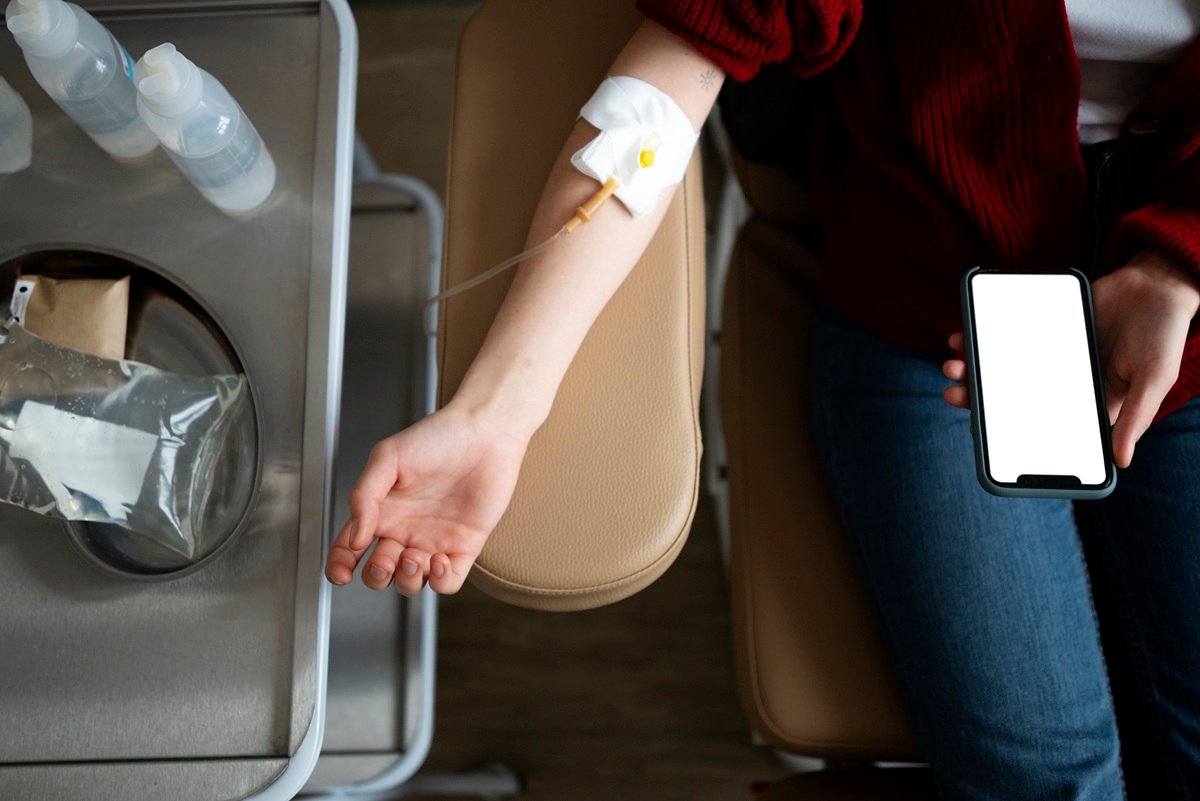
Hangover IV drip at home
Nausea, headache and dehydration after alcohol. We also come at night.
Details →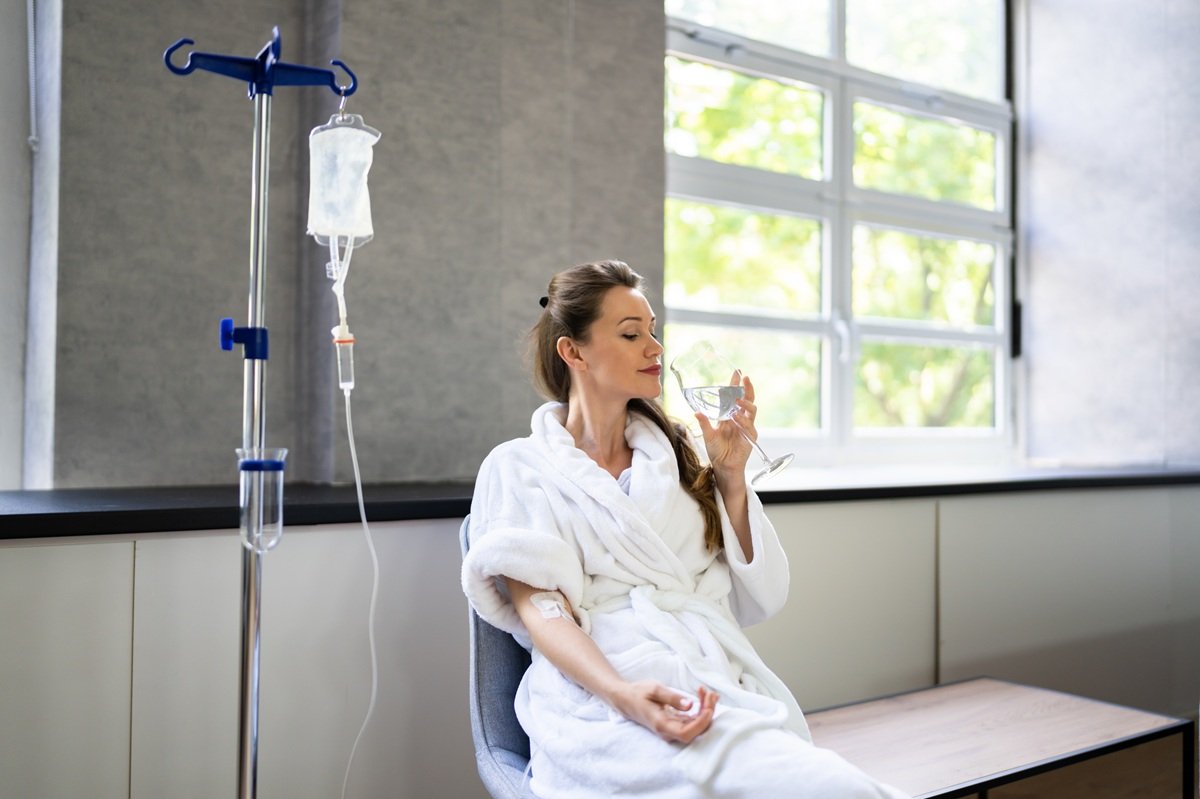
Alcohol detox at home
Help after prolonged drinking. First we check whether hospital care is needed.
Details →
Vitamin IV drip at home
Weakness, fatigue, recovery after illness.
Details →
Hydration IV drip at home
Dehydration after infection, vomiting, heat or exercise.
Details →
Magnesium infusion at home
Cramps, muscle tremors and symptoms of tetany.
Details →
Iron infusion at home
Iron deficiency confirmed by tests, after a doctor's assessment.
Details →
IV drip for athletes
Recovery after training, competitions and heavy exercise.
Details →